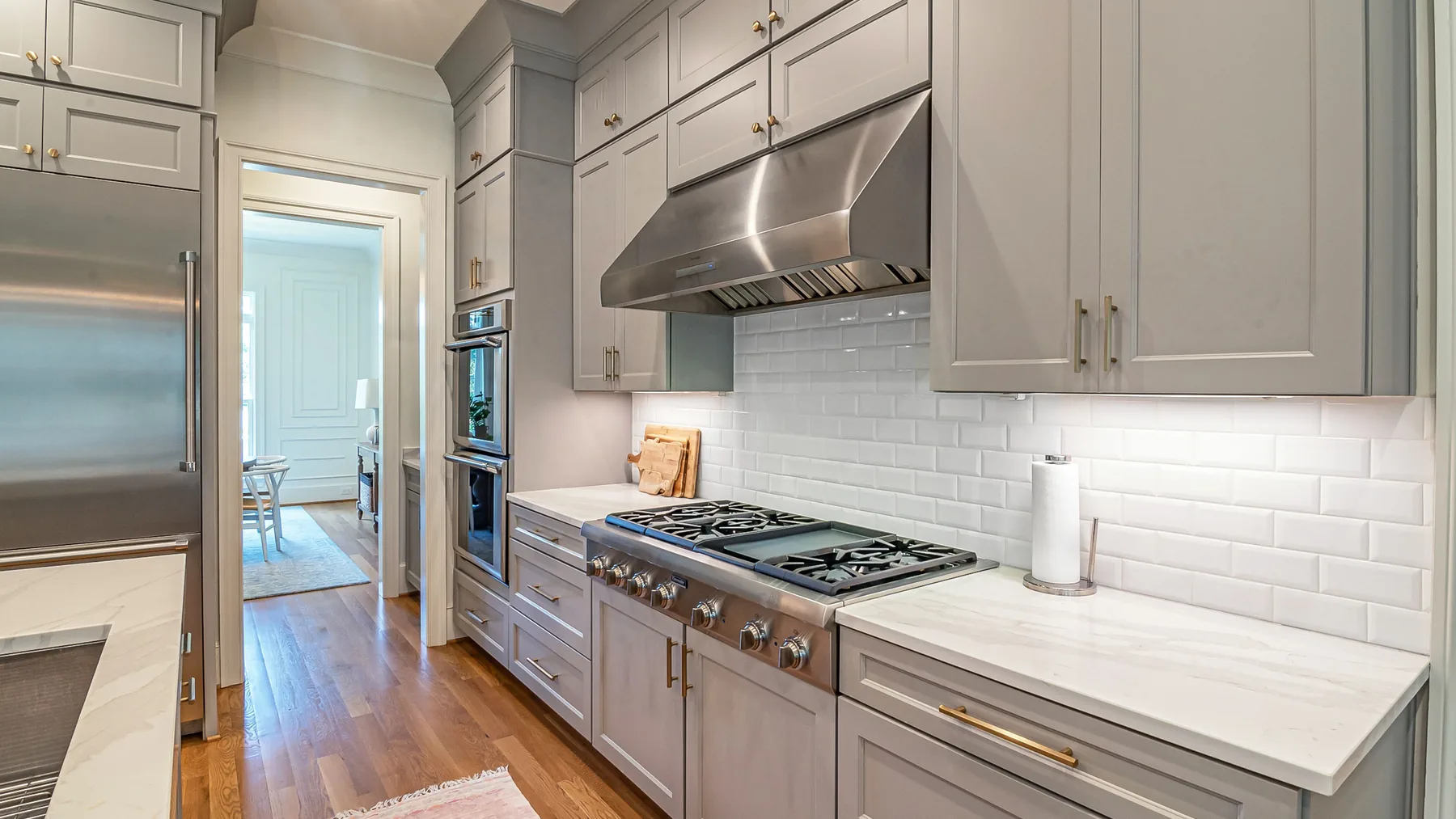
Homeowners across Greenville reach for the same phrase when their kitchen feels dated: they want the cabinets redone. But redone can mean two very different projects with different price tags and very different lifespans, and in the Upstate's humid climate the difference matters more than most people realize. Refinishing and repainting are not synonyms, and choosing the wrong one, or hiring someone who blurs the line, is how a kitchen ends up peeling within two years. Here is what each actually involves and how to pick for your home.
True cabinet refinishing is a strip-and-restore process. The existing finish is removed or thoroughly deglossed, the wood is repaired and sanded, and a fresh stain or clear coat is applied to bring back the natural grain. It is the right path when you love the wood itself but the topcoat has yellowed, worn, or clouded, which happens fast on cabinets that sit near a Greenville kitchen window or over a hardworking range. Refinishing keeps the material and renews the surface.
Repainting is a color change. The doors and boxes are cleaned, deglossed, primed, and sprayed with a durable cabinet-grade coating, usually to take oak or maple from a stained tone to a crisp white, greige, or navy. The prep is everything: skip the degreasing and bonding primer and the paint will chip at every fingernail. Done in a controlled setup with proper spray equipment, a repaint looks factory-smooth. Done with a brush and a rushed weekend, it looks exactly like a brushed weekend, and it fails faster in our climate.
South Carolina humidity is the quiet variable in every cabinet finish decision. Moisture works into any gap the finish leaves behind, and it makes cured hardness non-negotiable. A finish that never fully hardens stays slightly tacky and picks up grime; one applied over greasy or damp wood loses adhesion at the edges. This is why cutting corners on prep shows up so quickly in Greenville, Greer, and Simpsonville kitchens, and why a professional-grade catalyzed or waterborne finish outlasts a hardware-store enamel here by years.
Both options cost a fraction of new custom cabinets, which is their whole appeal. Refinishing tends to run a little less than a full color-changing repaint because it involves fewer coats and no primer system, though heavily worn wood can flip that. Either project usually takes several days to a week depending on kitchen size, and most of that is prep and cure time, not spraying. The finished result should feel smooth to the touch, show no brush texture, and stand up to daily wiping without softening.
Refinishing and repainting both assume the cabinet boxes are worth keeping. If your lower cabinets have swelled, delaminated, or grown soft at the toe kick from years of Upstate moisture, no finish will fix a failing structure, and money spent on paint is money wasted. The same is true if the layout no longer works for how you cook. In those cases, custom replacement is the honest recommendation. A good cabinet pro will tell you when to stop investing in a surface and start over, rather than selling you a finish that cannot outlast the wood beneath it. For general guidance on coating durability, manufacturers like Sherwin-Williams publish finish specs at sherwin-williams.com.
A properly prepped and sprayed refinish typically holds up eight to fifteen years in an Upstate kitchen, provided the finish is cured hard and the room is not chronically damp. The failures we see early are almost always prep failures, cabinets that were scuffed by hand and rolled instead of degreased, sanded, primed, and sprayed. In our humidity, the finish quality is what determines the lifespan.
Usually far cheaper, often a third to half the cost of full custom replacement, which is why it is so popular with Greenville homeowners whose boxes are still solid. The catch is that refinishing only makes sense when the cabinet structure is sound. If the boxes are particleboard that has swelled from years of Upstate humidity, paint will not save them and replacement is the smarter spend.
Why Cabinet Finish Matters in South Carolina's Humidity — Custom cabinetry designed, built, and installed across Greenville and the Upstate.