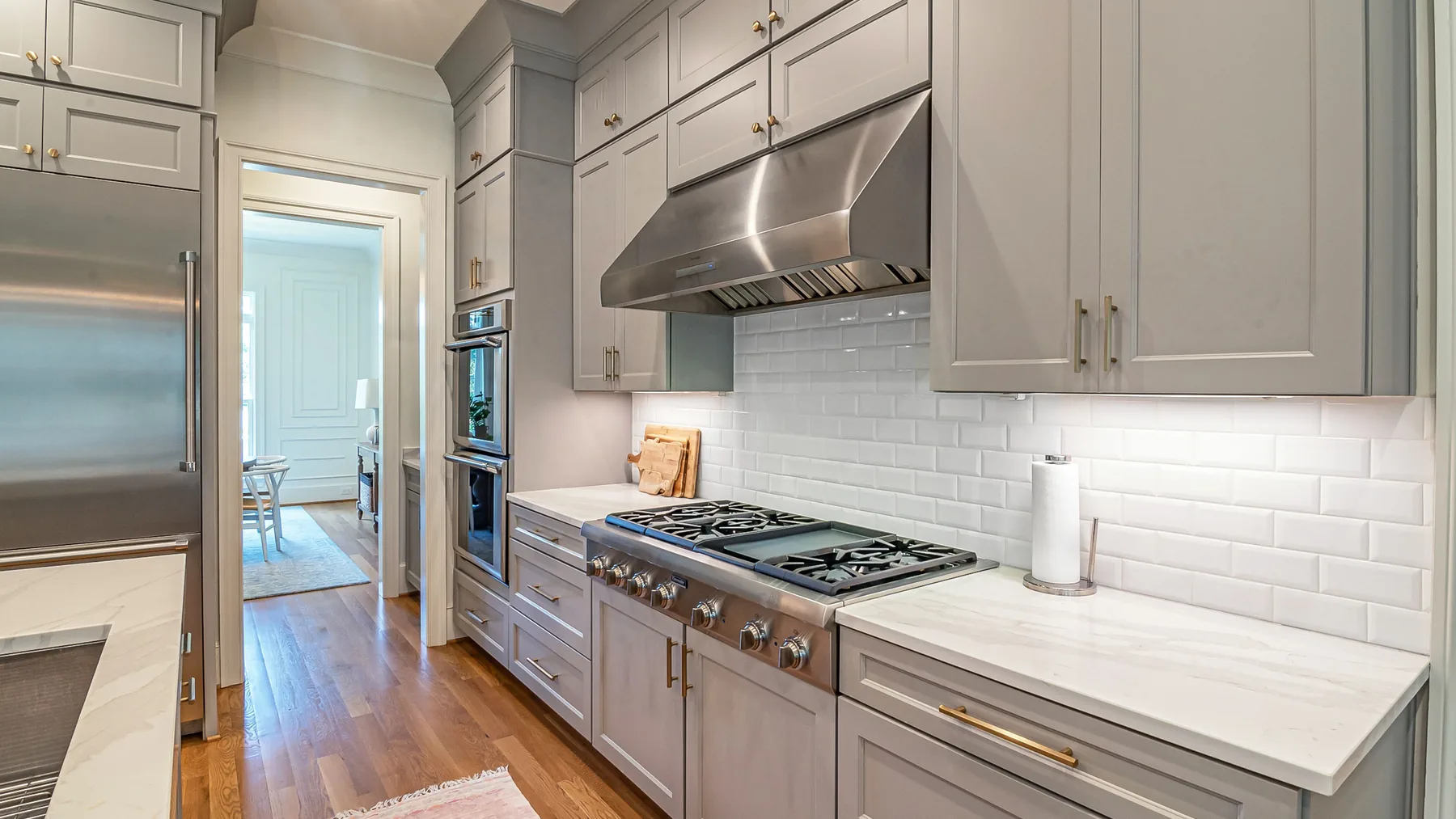
Once you have settled on custom cabinets, the next big fork in the road is the finish: paint or stain. It is a decision that shapes the entire feel of your kitchen, and it touches more than looks. In Greenville, where humidity works on wood all year and resale trends favor certain styles, the right finish choice depends on your taste, your home, and how you live in the space. Here is a clear-eyed comparison of the two so you can choose with confidence rather than second-guessing it after the doors are hung.
Stain soaks into the wood and lets its natural grain and character show through, enhancing what is already there. Paint sits on top of the wood as an opaque, uniform coat that hides the grain entirely and gives you a smooth, furniture-like surface in any color you want. That single distinction drives everything else, from which wood you should use to how the finish ages and what it costs. Neither is better in the abstract; they simply do different things, and the best one is the one that matches the kitchen in your head.
Painted cabinets are the dominant look in Greenville kitchens right now, and it is easy to see why. Crisp whites, soft grays, greens, and navy give a clean, bright, updated feel that suits both older homes near downtown and new construction in the suburbs. Paint offers essentially unlimited color flexibility, brightens smaller or darker kitchens, and delivers that smooth, high-end surface buyers love. The tradeoff is that paint shows wear and touch-ups more plainly over time, and on solid-wood doors it can develop fine cracks at the joints as the wood expands and contracts with our humidity. Built and finished well on stable wood, though, a painted kitchen stays beautiful for many years.
Stain celebrates the wood itself, and for homeowners who love natural material it is the obvious pick. It brings warmth and texture, works wonderfully in traditional, craftsman, and rustic Upstate homes, and forgives the daily bumps of a busy kitchen better than paint because scratches and movement disappear into the grain. Stain also skips the extra prep steps paint requires, which can make it a bit less expensive. Its limits are color, you are working within the wood natural tones rather than any hue you like, and a very dark stain can make a small kitchen feel closed in. For the right home, that natural warmth is exactly the point.
Our humidity is the quiet test of any finish. As wood swells and shrinks through Greenville summers and heated winters, painted joints are where movement shows first, as those faint lines at the door corners. Stain hides the same movement far more gracefully. The great equalizer is the finish system underneath: a quality catalyzed or conversion-varnish topcoat seals the wood against moisture and dramatically slows wear on either paint or stain. That is why professional finishing matters so much here, and why we do not cut corners on the topcoat regardless of which look you choose. The Kitchen Cabinet Manufacturers Association sets the durability standards worth building to.
The wood and the finish are a team. Paint wants a smooth, tight-grained species like maple or poplar so the surface reads glassy rather than showing wood texture through the color. Stain wants a wood with character to reveal, oak, cherry, or hickory, so the grain becomes the feature. Trying to stain a bland wood or paint a heavily grained one usually disappoints. Sorting this out together keeps you from fighting the material, and it is one of the first things we work through in a Greenville design consultation.
You do not always have to choose just one. Two-tone kitchens, a painted perimeter with a stained wood island, or painted uppers over stained or wood-toned lowers, have become very popular across the Upstate. Done well, this approach gives you the bright, current feel of paint with a warm natural anchor, and it lets an island become a genuine centerpiece. It is a great middle path for homeowners who love both looks and cannot commit to a single one, and it photographs beautifully for resale too.
Painted finishes generally cost a little more because they demand extra prep, priming, and coats to get that flawless surface, while stain is often slightly friendlier on the budget. Over time, painted cabinets show smudges and the occasional chip more visibly but are easy to wipe and touch up, and stained cabinets hide daily life better but can be harder to color-match if a repair is ever needed. Both clean up with a soft cloth and mild cleaner, and both reward keeping indoor humidity moderate so the wood underneath stays stable. Neither is high-maintenance; they simply age in their own way.
One thing homeowners rarely consider is how differently each finish behaves under Greenville light. Many Upstate kitchens face north or sit under deep porches and tree cover, which mutes daylight, and a dark stain in that setting can feel heavier than it did in a bright showroom. A crisp painted white or pale gray, by contrast, bounces what light there is and makes the room feel larger. Kitchens with big south or west windows can carry a rich stain or a moody painted color easily because they get plenty of sun. Before you decide, look at your space at the times of day you actually use it, morning coffee, dinner prep, evening cleanup, because the finish you choose will live under that exact light for the next twenty years. We always view samples in your own kitchen for this reason rather than trusting a store display.
Paint gives you bright, flexible, of-the-moment color and the smooth look that dominates Upstate kitchens; stain gives you warmth, natural character, and forgiving durability. Both perform beautifully when they are built on the right wood and sealed with a quality finish for our climate. The best way to decide is to see them side by side in your own space, which is exactly what we bring to a design visit so you can pick the finish you will still love years down the road.
Both hold up well when they are properly built and finished, but they show wear differently. Painted finishes can develop hairline cracks at the joints as wood moves with Upstate humidity, most visible on solid-wood doors, while stained finishes hide that movement better because the grain camouflages it. Choosing a stable wood and quality conversion-varnish or catalyzed finish minimizes the issue on either, so it comes down to look more than durability.
Painted white and soft-neutral kitchens have been the strongest sellers across Greenville for years and photograph beautifully in listings, so they are the safe resale choice. That said, warm stained wood and the growing two-tone trend, a painted perimeter with a stained island, also appeal to Upstate buyers and can help a kitchen stand out. Either reads as a quality upgrade when the workmanship is good.
Why Cabinet Finish Matters in South Carolina's Humidity — Custom cabinetry designed, built, and installed across Greenville and the Upstate.