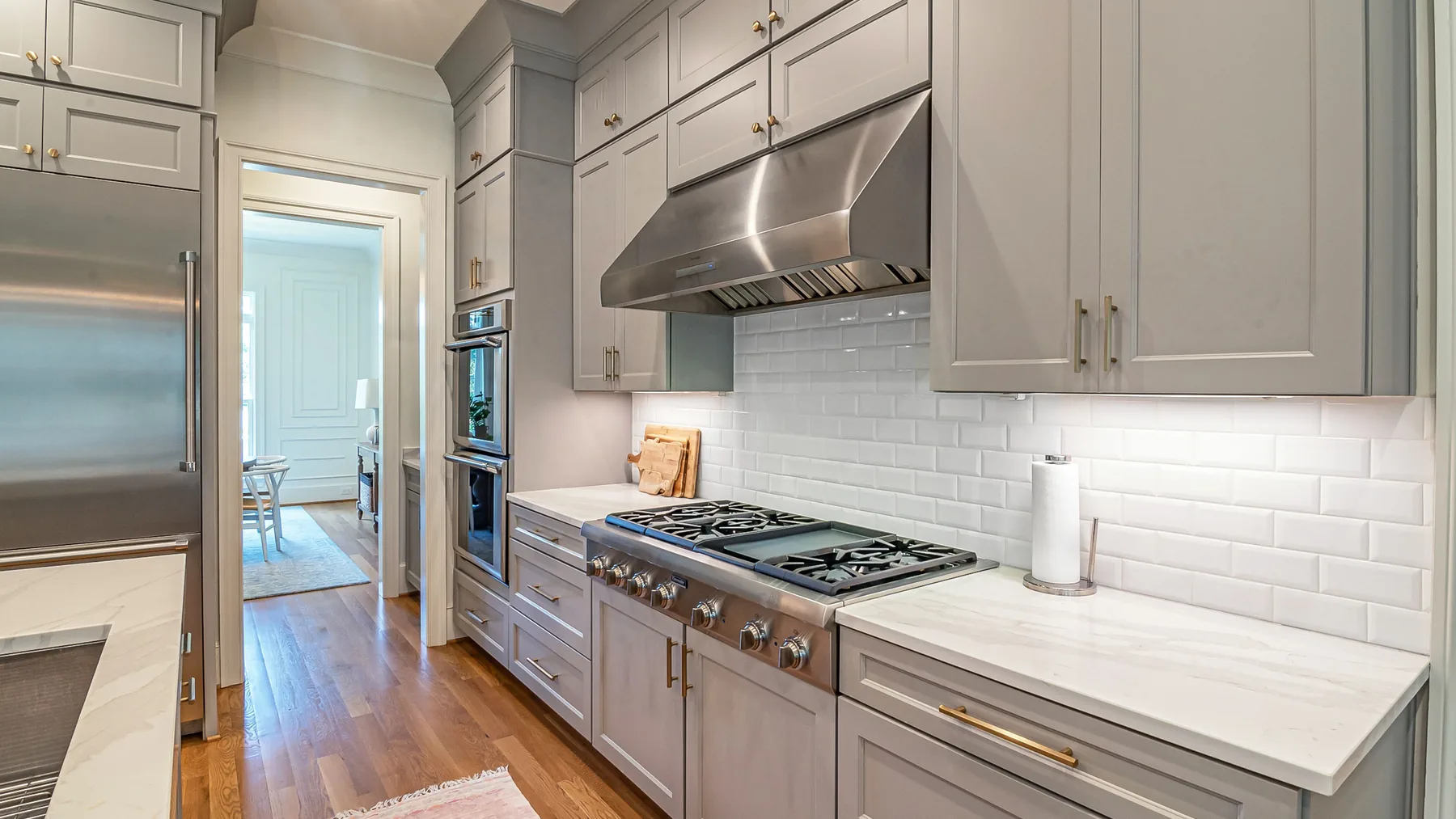
Open shelving shows up on every design feed, styled with matching dishes and trailing greenery, and plenty of Greenville homeowners wonder whether to ditch their upper cabinets for the look. It can be gorgeous, but it is not the right call for every kitchen or every cook. Here is an honest comparison of open shelving and upper cabinets, and how to decide what belongs in your Upstate home.
The appeal of open shelving
Open shelves make a kitchen feel bigger, brighter, and more personal. They break up a wall of cabinetry, show off pretty dishware, and keep everyday items within easy reach. In smaller downtown Greenville kitchens, replacing bulky uppers with slim shelves can make the whole room breathe. Done well, open shelving adds character that closed cabinets simply cannot, which is a big part of why the look endures.
The case for upper cabinets
Upper cabinets earn their keep with concealed, dust-free storage and sheer capacity. They hide the mismatched mugs and the cereal boxes, protect contents from grease and grime, and let you pack far more into the same wall. For families who cook constantly and store a lot, uppers are simply more practical. They also give a kitchen a finished, tailored look, especially when run to the ceiling with crown molding on top.
Storage: how much do you really have?
This is the deciding question for most Greenville kitchens. Open shelves hold a fraction of what closed uppers do, so trading cabinets for shelves means finding that storage elsewhere, in a pantry, an island, or lower cabinets. If your kitchen is already tight on space, going all-in on open shelving usually creates a storage problem you will resent within a month. Be honest about how much you own before you commit.
Dust, grease, and Upstate humidity
Practicality matters in our climate. Open shelves collect dust and cooking grease, so anything displayed but rarely used needs regular wiping. South Carolina humidity adds another wrinkle: in a kitchen that swings damp, closed cabinets protect contents better, while open shelves keep air moving around dishes. Neither is disqualifying, but if you dislike dusting or run a humid Upstate kitchen without great ventilation, lean toward more closed storage.
Cost comparison
People assume open shelving is far cheaper, and simple shelves can be, but a quality open-shelf install with solid wood, hidden brackets, and a finished look is not the bargain it appears. Upper cabinets cost more in materials but deliver much more storage per dollar and per foot of wall. When you compare true cost against usable storage, cabinets often win on value even though the sticker on a shelf looks smaller.
The hybrid approach most people love
You rarely have to choose all one or the other. The most satisfying Greenville kitchens we build blend the two: closed uppers for the bulk of storage, with a section of open shelving as an accent, often flanking a window, a range hood, or a coffee station. You get the airy, personal feel where it shows and the hidden capacity where you need it. For most families, this hybrid is the sweet spot.
What works in older Greenville homes
In historic downtown and older Upstate homes, a touch of open shelving can suit the period character, especially paired with vintage brackets or a plate rail. But these kitchens are frequently short on storage to begin with, so we usually keep the majority of uppers and add shelving only as a deliberate accent. The goal is charm without sacrificing the function an older, smaller kitchen needs even more than a big one.
What works in new construction
Newer homes in Five Forks, Simpsonville, and Powdersville often have the space to play. With a walk-in pantry handling bulk storage, you can afford more open shelving in the main kitchen for style. The clean lines of a transitional new build pair well with a run of floating shelves against tile. When storage is covered elsewhere, open shelving becomes a design choice rather than a compromise.
Styling open shelves without the clutter
Open shelving only looks good if it stays curated. The trick is to display items you use and love, group by color and material, leave breathing room, and resist cramming. Everyday dishes work because they get rotated and stay clean; rarely used gadgets do not. If the idea of keeping shelves tidy stresses you out, that is a strong sign closed cabinets will make you happier day to day.
Resale and buyer expectations
If resale is on your mind, remember that most buyers in the Greenville market still expect ample cabinet storage. A tasteful mix reads as current and appealing; a kitchen stripped of uppers can worry practical buyers who see a storage shortfall. A hybrid layout tends to photograph beautifully and reassure buyers at the same time, which is the best of both worlds when it comes time to sell.
Making the decision
Weigh three things: how much you need to store, how much you enjoy styling and cleaning, and the character of your home. Heavy cooks and busy families lean toward cabinets; minimalists with a good pantry can enjoy more shelving. When in doubt, start with mostly cabinets and add a focused stretch of open shelving. It is far easier to enjoy a little open space than to solve a storage crisis after the fact.
Mixing materials on open shelves
One reason the hybrid look works so well is that open shelving invites a change of material. A stretch of warm wood shelving against a painted cabinet run, or floating shelves bracketed on a tile backsplash, adds texture that an all-cabinet wall cannot. In Greenville kitchens we often use the open section to introduce a natural wood tone that ties into flooring or an island, giving the room warmth without committing the whole kitchen to open storage. It is a small design move with a big payoff.
A quick test before you commit
Before you tear out uppers, try living with the idea. Empty one upper cabinet and set those items on the counter for a week to see how much open, dust-exposed storage you actually want to maintain. If the counter clutter and wiping annoy you, that is your answer. If you enjoy seeing and reaching your everyday dishes, open shelving may suit you. It is a free experiment that prevents an expensive Greenville remodel regret.
The bottom line
Open shelving and upper cabinets are not enemies; they are tools for different jobs. The right answer for your Greenville kitchen depends on your storage needs, your tolerance for upkeep in our humid climate, and the style of your home. For most Upstate families a thoughtful blend delivers the look everyone wants without the regret. We are happy to walk your kitchen and help you land on a mix you will love for years.