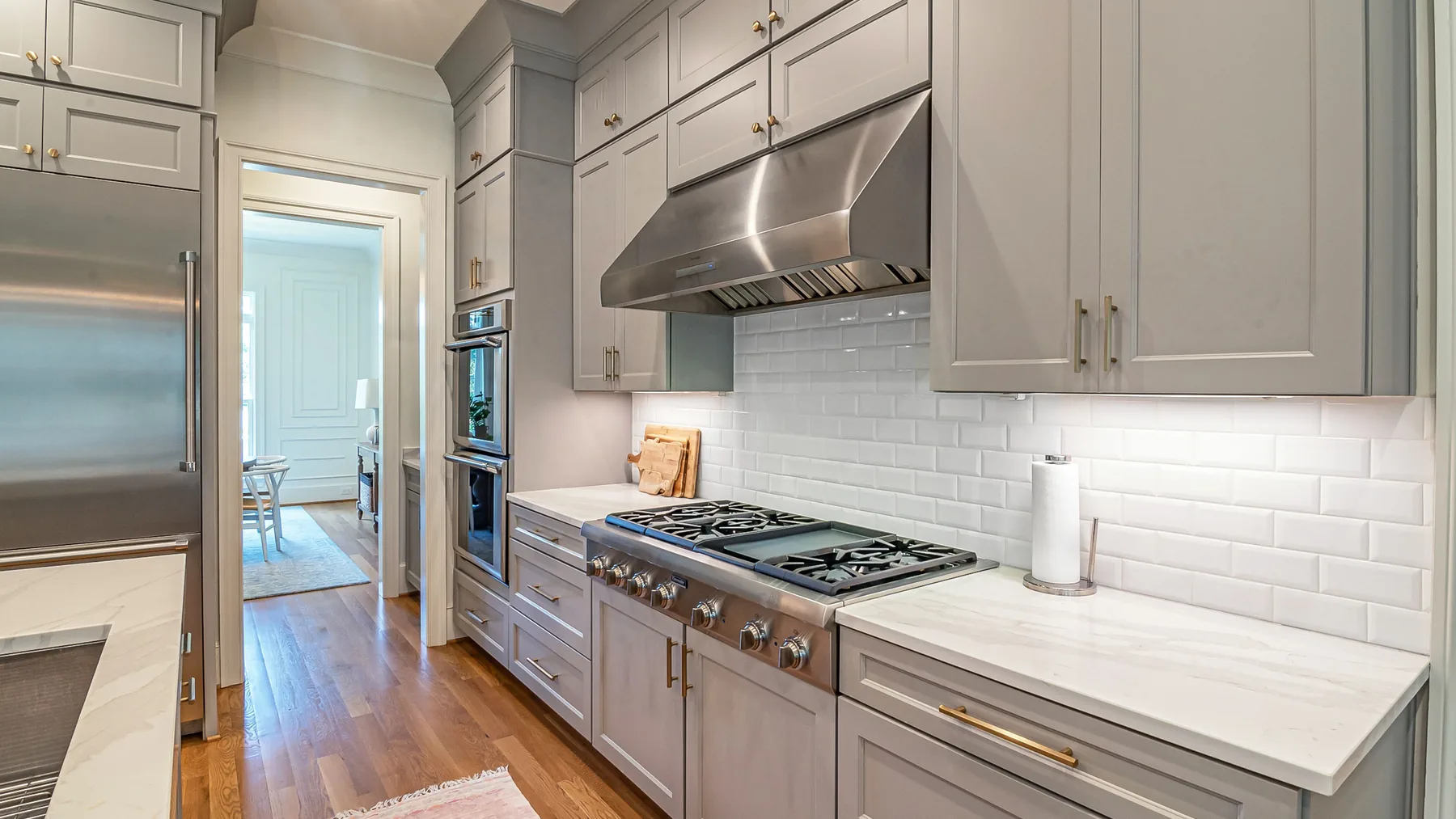
When you compare cabinet quotes in Greenville, the biggest difference in quality is usually something you never see once the kitchen is installed: the cabinet box itself. The boxes are the plywood or engineered panels that make up the sides, bottoms, and backs of every cabinet, and the material a shop uses there says more about how your kitchen will age in the Upstate than the door style you pick. This guide explains MDF, particleboard, and plywood boxes in plain terms and which holds up best in our South Carolina humidity.
Three materials dominate cabinet boxes. Particleboard is the cheapest, made of compressed wood chips and glue, and it is what you find in most big-box and builder-grade cabinets. MDF, or medium-density fiberboard, is a denser, smoother engineered panel that paints beautifully and resists some warping. Plywood is layers of real wood veneer glued in alternating grain, and it is the strongest and lightest of the three. A shop can mix these, for example a plywood box with an MDF shelf, so it helps to ask exactly what goes where.
Greenville summers are humid, and that is the single most important factor for cabinet boxes here. Particleboard is the clear loser in our climate: if it ever gets wet from a slow sink leak or sustained humidity, it swells, crumbles, and never recovers, and the problem shows up first at the toe kick and under the sink. MDF handles ambient humidity better than particleboard but still swells badly with direct water exposure. Plywood is the most moisture-tolerant because its cross-laminated layers resist swelling and it dries out rather than disintegrating. For a kitchen that will live through decades of Upstate summers, that difference is decisive.
Beyond moisture, the materials differ in strength. Plywood holds screws and fasteners far better, which matters because that is how cabinets are hung on the wall and how hinges and heavy drawer slides are anchored. A heavy stack of dishes in an upper cabinet puts real load on those fasteners. Particleboard strips its screws over time and sags under weight, which is why bargain cabinets develop drooping shelves. MDF is heavy and strong in panel form but does not hold edge screws as well as plywood. For uppers especially, plywood is the safe choice.
MDF is not the villain here. It is actually the best material for painted cabinet doors and panels, because it has no grain to telegraph through paint and no joints to crack, giving that flawless painted finish Upstate homeowners love on a Shaker door. So a premium kitchen often uses MDF for the painted doors and plywood for the boxes, getting the best of both. The mistake is using MDF or particleboard for the structural box to cut cost while calling it custom. Knowing where each material belongs is the key.
When two cabinet quotes differ by thousands of dollars, the box material is often the hidden reason. A quote built on particleboard boxes can look like a bargain and become a regret when the sink base swells in five years. Ask every Greenville cabinet maker, in writing, what the box, shelves, and back panel are made of. A reputable shop will happily tell you and will usually be building with plywood boxes. If a bidder dodges the question, that is your answer.
Whatever material you choose, a few habits protect it in our climate. Fix sink and dishwasher leaks immediately, because sustained dampness is what destroys engineered panels. Keep the kitchen ventilated to manage humidity. Add a simple under-sink leak tray and check it occasionally. These steps matter most for homes without strong ventilation and for lake houses in the Upstate where ambient humidity runs high. Good materials plus good habits are what make a kitchen last.
Even shops that use a decent box sometimes economize on the back panel and shelves, and those matter more than people realize. A thin, stapled hardboard back flexes and makes the whole cabinet rack out of square over time, while a full-thickness plywood back lets the cabinet be screwed solidly to wall studs and stay true. Shelves that are too thin sag under dishes, especially in our humidity. When you evaluate a Greenville quote, ask about the back panel and shelf thickness, not just the box sides, because that is a favorite place to quietly save money.
How the panels are joined and finished also separates quality from bargain. Dado joints and glued, pinned construction hold far better than staples alone, and quality edge banding seals the exposed plywood edges against moisture so they do not delaminate in Upstate humidity. These are the small details that decide whether a cabinet still feels solid in fifteen years or starts coming apart at the corners. A shop proud of its construction will gladly walk you through how its boxes are built.
It often does. Reputable cabinet makers back plywood-box construction with longer warranties precisely because they trust the material to last, while particleboard cabinets tend to carry thinner guarantees or lots of exclusions around moisture. When you read a Greenville cabinet warranty, notice what it says about water and swelling. A strong warranty on a quality box is a sign the shop expects the kitchen to outlast the paperwork, which is exactly what you want in our climate.
The box material question ties into whether you choose face-frame or frameless cabinets. Face-frame construction, traditional in many Greenville homes, adds a solid wood frame to the front of the box that stiffens it and gives a classic look. Frameless, or European, construction skips the frame for more interior space and a modern feel but leans even harder on a quality box and strong joinery for its rigidity. Either way, the underlying panel material still decides durability, so the frameless style in particular is one where cutting to particleboard is a mistake you will feel.
For Greenville kitchens, plywood boxes with MDF painted doors is the combination that ages best in our humidity, holds fasteners, and justifies the word custom. Particleboard belongs in disposable furniture, not in a kitchen you expect to keep for decades. The material you cannot see is the one that determines whether your investment holds up, so make the box part of the conversation before you sign anything. The Upstate climate rewards doing it right the first time.
Yes. In our humid Upstate climate plywood boxes resist swelling, dry out rather than crumbling if they ever get wet, and hold the screws that anchor wall mounts, hinges, and heavy drawer slides. Particleboard swells and strips its fasteners over time, so plywood is the material that justifies the custom label and lasts for decades here.
Not at all, as long as it is used in the right place. MDF is the best material for painted doors and panels because it has no grain to show through paint and no joints to crack, giving a flawless finish. The mistake is using MDF or particleboard for the structural box. A premium Greenville kitchen typically pairs MDF painted doors with plywood boxes.
Plywood boxes, MDF painted doors, and honest answers about what goes into your kitchen across Greenville and the Upstate.