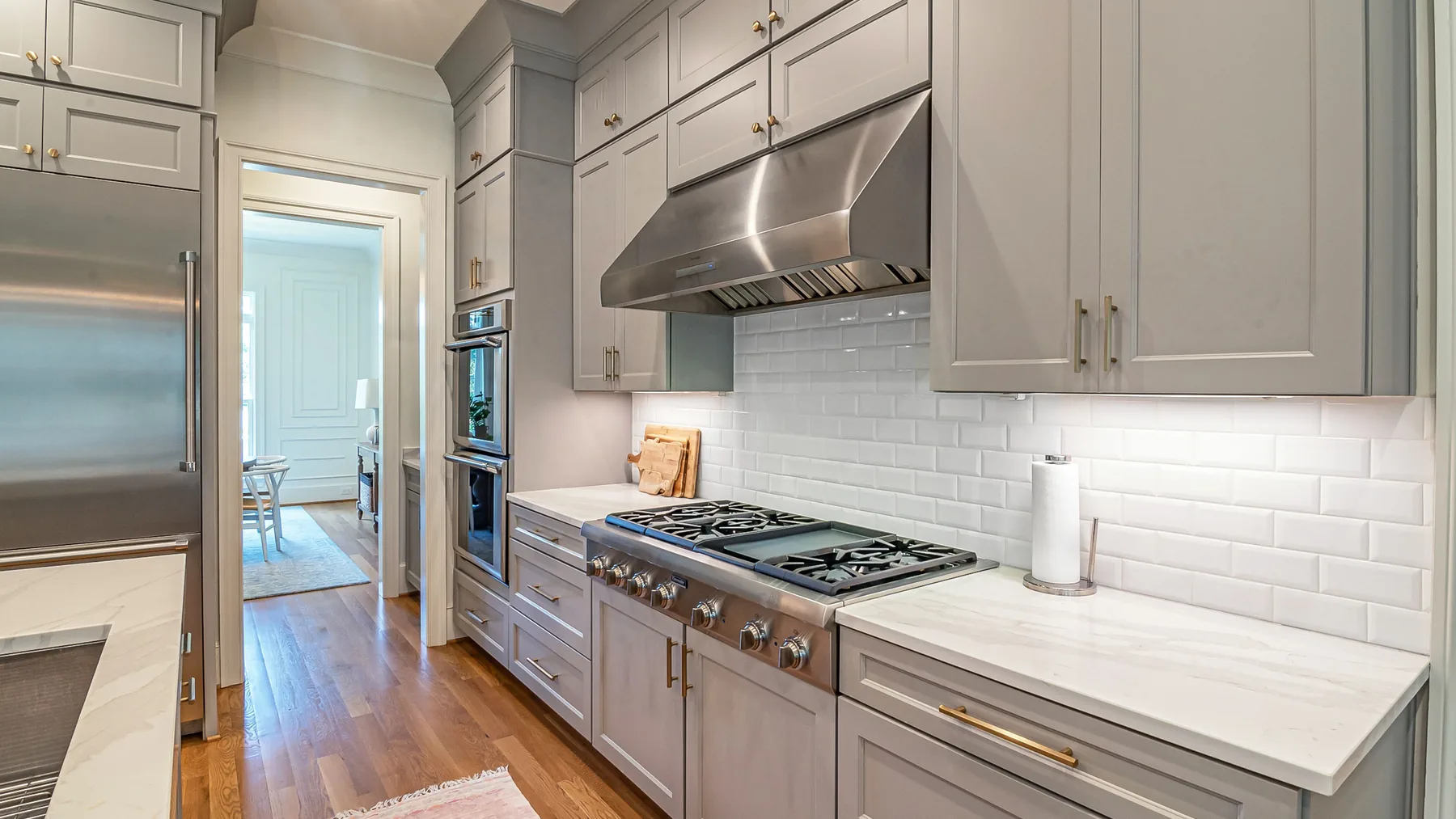
Cabinets and countertops are a marriage. You choose them separately, often from different suppliers, yet they live side by side for decades and have to look right together in your Greenville kitchen's specific light. Get the pairing right and the whole room feels designed; get it wrong and even expensive materials can clash. This guide covers how to pair countertops with custom cabinets, from color and contrast to material and edge, with an eye toward what works in Upstate homes and holds up to South Carolina living.
Cabinets are the larger visual mass and usually the bigger commitment, so it is smart to lock in your cabinet color and door style first, then select a countertop that flatters it. That order keeps you from falling for a slab that fights your cabinetry. If you already have a countertop you love or one you are keeping, reverse the logic and build the cabinet color around it. Either way, decide which of the two is the star and let the other support it, rather than having both compete for attention.
The single biggest choice is how much contrast you want. Light cabinets with a darker counter is a timeless, high-contrast look that feels crisp and grounds the room. Dark cabinets with a light counter reverses that drama and reads modern and airy. Tone-on-tone, where cabinets and counters sit close in value, creates a calm, seamless, upscale feel that is very popular in new Greenville builds. Two-tone kitchens, with one cabinet color on the perimeter and another on the island, let you use the countertop to tie both together. There is no wrong answer, only the mood you want; a bright downtown bungalow kitchen and a sleek Five Forks new build may call for opposite approaches.
Material matters as much as color, and each behaves differently in daily use. Engineered quartz is the workhorse of modern kitchens: non-porous, low-maintenance, and available in consistent patterns that pair predictably with any cabinet color, which makes it a safe, popular choice. Granite offers natural variation and durability but needs periodic sealing. Marble is stunning and classic but soft and stain-prone, better suited to homeowners who accept a lived-in patina. In our humid climate, the non-porous nature of quartz is a genuine practical advantage, since it will not absorb moisture or harbor anything in the surface. Manufacturers like Cambria detail their quartz options at cambriausa.com.
Clashes usually come down to undertones, not the obvious color. A warm, creamy white cabinet can look dingy next to a cool, blue-gray quartz, while the same quartz sings against a crisp bright-white cabinet. Before committing, put a physical sample of the countertop against your actual cabinet door and look at both in your kitchen's daylight and at night under your lighting, because Greenville's bright afternoons and warm evening bulbs will shift how everything reads. Finish plays a role too: a matte or honed counter feels softer and hides fingerprints, while a polished surface reflects light and brightens a darker kitchen.
The backsplash is where cabinets and counters shake hands, and it can make or break the pairing. A backsplash that carries the counter material up the wall creates a seamless, luxe look; a contrasting tile backsplash adds personality and can bridge cabinet and counter colors that are otherwise far apart. If your cabinets and counter are high-contrast, a mid-tone backsplash can soften the transition; if they are tone-on-tone, the backsplash is your chance to add interest. Planning all three together, rather than choosing the backsplash last, keeps the kitchen cohesive.
The countertop edge is a small detail with a real effect. A simple square or eased edge reads modern and pairs well with clean Shaker or flat-panel cabinets, while a beveled or ogee edge suits more traditional cabinetry common in older Upstate homes. On an island, plan the counter overhang around how you will use it: a generous overhang for seating changes both the countertop size and the cabinet support needed underneath, which is exactly the kind of thing to coordinate between your cabinet maker and fabricator up front so the island is comfortable and properly supported.
Because cabinets and counters come from different trades, the pairing succeeds or fails on coordination. Sequencing matters: cabinets are installed first, then the counters are templated to the actual installed boxes for a precise fit. Choosing both with one designer's eye, and confirming that seams, sink placement, and appliance cutouts all work with the cabinet layout, prevents the small mismatches that undermine an expensive kitchen. This is a strong argument for working with a cabinet maker who will help guide the countertop selection rather than leaving you to reconcile two separate vendors on your own.
If you want a shortcut to a look that reliably lands, a few combinations are perennial favorites in Upstate kitchens for good reason. Crisp white Shaker cabinets with a white or lightly veined quartz counter give a bright, clean, and endlessly resellable kitchen that suits both historic downtown homes and new construction. Warm greige or soft sage cabinets paired with a creamy quartz feel current and inviting without chasing a trend too hard. Deep navy or charcoal lower cabinets under a light counter, often with white uppers, deliver drama while staying timeless. Natural or stained wood cabinets with a honed granite or warm-toned quartz lean cozy and organic, a nice fit for craftsman and bungalow-style homes around North Main. And for a truly seamless, high-end feel, tone-on-tone greige cabinets with a matching quartz and a waterfall island edge read distinctly modern. Any of these is a safe starting point you can personalize with hardware, backsplash, and lighting.
Even if you plan to stay for years, kitchens drive home value in the Greenville market, so it is worth keeping resale in the back of your mind. The most broadly appealing pairings tend to be lighter, neutral cabinets with a quartz counter, because they photograph well and let buyers picture their own style. Bolder combinations are wonderful for a forever home but narrow the audience if you sell. A common strategy is to keep the big, expensive surfaces, the cabinets and counters, on the timeless side, and express personality through the things that are cheap to change later, like hardware, paint, and the backsplash. That way your kitchen feels personal now and stays marketable down the road.
The goal is harmony: a countertop whose color, undertone, material, and finish flatter your cabinets and suit how your Greenville household actually lives. Decide your star, choose your contrast, test samples in your real light, and plan the backsplash and edges as part of the whole. Do that, and the two biggest surfaces in your kitchen will look like they were always meant to be together. For where countertops and cabinets land in a full budget, our Greenville cabinet cost guide offers useful context.
Either works; it is about the mood you want. Light cabinets with a darker counter is a timeless, crisp look, while dark cabinets with a light counter feels modern and airy. Tone-on-tone pairings that sit close in value create a calm, upscale feel popular in new Greenville builds. Decide which surface is the star and let the other support it.
Engineered quartz is a standout for the Upstate because it is non-porous and low-maintenance, so it will not absorb moisture or need periodic sealing the way granite and marble do. It also comes in consistent patterns that pair predictably with any cabinet color, making it a safe, durable choice for South Carolina's humid climate.
Why Cabinet Finish Matters in South Carolina's Humidity — Custom cabinetry designed, built, and installed across Greenville and the Upstate.