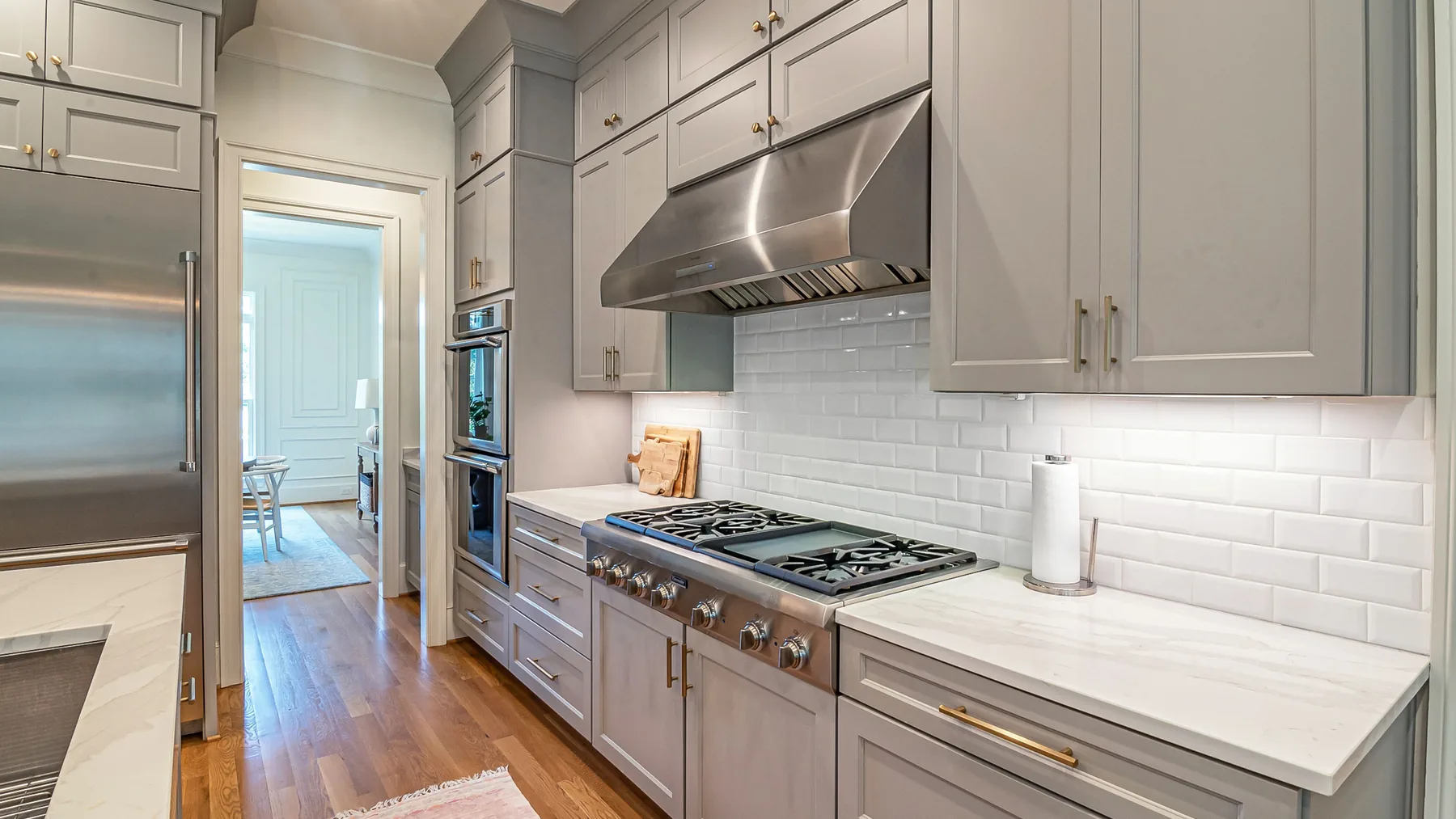
The difference between cabinets that look built-in and cabinets that look dropped-in usually comes down to trim. Crown molding, light rail, and the small finishing details are what make custom cabinetry feel like a permanent, tailored part of a Greenville home rather than a set of boxes on a wall. Here is what cabinet trim includes, how it should match your home, and what it adds to a project.
What cabinet trim actually includes
Trim is a family of finishing pieces. Crown molding caps the tops of cabinets, light rail hides under-cabinet lighting and finishes the bottom edge of uppers, toe kick trims the base, and scribe molding and fillers close the gaps where cabinets meet walls and ceilings. Individually these pieces seem minor; together they are what erase the seams and gaps that give away a builder-grade install. Good trim is quiet, and that is exactly the point.
Crown molding: the finishing touch
Crown molding is the most visible trim and the one that most transforms a kitchen. Running crown along the tops of the uppers draws the eye upward, makes the ceiling feel taller, and gives cabinetry a substantial, finished look. It also closes the awkward gap that otherwise sits above cabinets that stop short of the ceiling. From a simple single profile to a stacked, layered crown, the style you choose sets much of the room formality.
Light rail, toe kick, and fillers
The unsung trim pieces do a lot of work. Light rail along the bottom front of the uppers conceals task lighting and shields your eyes from the glare, a detail that matters in every working kitchen. Toe kick trim gives the base cabinets a clean footing and protects it from shoes and mops. Fillers and scribe molding let cabinets meet out-of-square walls, common in older Greenville homes, without unsightly gaps. These small pieces are where craftsmanship shows.
Matching trim to your ceiling height
Ceiling height drives crown choices. In a standard eight-foot kitchen, cabinets can run to the ceiling and crown finishes them flush at the top for a seamless, built-in look. With nine or ten-foot ceilings, common in newer Upstate homes and some grand older ones, you can stack taller crown or add a soffit treatment so the cabinetry still relates to the ceiling instead of floating below it. The trim has to be scaled to the room to look right.
Trim styles for Greenville architecture
The Upstate has a wide mix of home styles, and the trim should nod to yours. A craftsman bungalow near downtown suits simpler, squared profiles; a traditional brick home wears a more detailed, layered crown well; a modern or transitional new build in Five Forks often looks best with minimal or no crown and clean shadow lines. Matching the cabinet trim to the architecture is what keeps a kitchen from feeling out of place in its own house.
Historic downtown and older homes
Greenville older neighborhoods reward careful trim work. Existing homes often have beautiful original moldings around windows and doors, and thoughtful cabinet trim can echo those profiles so the new kitchen feels original to the house. Because these homes rarely have square walls or level ceilings, skilled scribing and filler work is essential to a clean result. This is exactly where custom trim outshines anything off the shelf.
New construction and transitional styles
Newer homes across Simpsonville, Powdersville, and Greer often lean transitional or contemporary, where less is more. Here trim is about crisp, restrained lines: a slim crown or a flush ceiling detail, understated light rail, and clean toe kicks. The craftsmanship is just as demanding even when the look is simple, because minimal trim leaves nowhere to hide a sloppy joint. Restraint, done well, reads as modern and expensive.
Painted vs stained trim
Trim should match the cabinets it finishes. On painted cabinetry, seams are filled and painted so the crown and fillers vanish into a continuous surface, which is part of why painted kitchens look so seamless. On stained wood, the trim is milled from matching species and grain so it blends naturally, which takes more care in selection. Either way, the finish on the trim must match the boxes exactly, and matching it is a craft in itself.
Trim and Upstate humidity
South Carolina humidity makes wood move, and trim is where that movement shows first as hairline cracks at joints. Quality materials, proper acclimation before installation, and flexible caulking at seams keep trim looking tight through the seasonal swings. This is another reason to have trim installed by people who build for our climate rather than tacking on stock molding that will telegraph every humid summer.
The cost of adding trim
Trim is a modest share of a cabinet budget but a large share of the finished impression. Crown, light rail, and finish trim add material and skilled labor, yet the upgrade from bare cabinet tops to a fully trimmed, built-in look is one of the highest-impact dollars you can spend. When homeowners see the before and after, the trim is almost always the detail they point to as what made the kitchen feel custom.
Getting it installed right
Trim is where installation skill matters most. Miters must be tight, returns clean, and scribes patient, especially against the wavy walls and ceilings of older Greenville homes. Rushed trim work shows immediately in gapped corners and uneven reveals. We treat trim as the finishing craft it is, because it is the last thing installed and the first thing everyone notices when they walk into the room.
Trim beyond the kitchen
The same trim thinking applies anywhere we build cabinetry in a Greenville home. A bathroom vanity, a home office built-in, a mudroom bench, or a living-room media wall all look finished when crown, light rail, and scribe work tie them into the room. Carrying a consistent trim profile through the house makes separate built-ins feel like part of one intentional design rather than a series of add-ons, which is exactly the cohesive look Upstate homeowners are after.
One more finishing detail
Do not overlook where cabinetry meets the ceiling and floor at the ends of a run. A finished end panel, a returned crown, and a clean toe kick termination are the small touches that keep the eye from catching on a raw edge. These are the details people cannot always name but always feel when a kitchen looks properly built. Getting them right is the quiet signature of true custom work.
The bottom line
Crown molding and trim are what turn cabinets into cabinetry. They close the gaps, match your home, hide the lighting, and give the whole kitchen a finished, permanent feel. Whether your Greenville home is a historic downtown classic or a new build out in Five Forks, choosing the right trim and having it installed with care is one of the surest ways to make a kitchen look truly custom. We would be glad to show you the options for your space.