Choosing the wood is one of the most consequential decisions in a custom cabinet project, and it is easy to get lost in the options. In Greenville the choice is not only about looks and budget; our Upstate humidity swings hard between muggy summers and dry, heated winters, and that movement rewards some woods and punishes others. This guide walks through the species we build with most for local kitchens, how each handles our climate, what it costs, and how to land on the right one for your home, whether you are updating a older place near downtown or finishing a new build out in Five Forks.
Solid wood is a living material that expands when the air is humid and contracts when it is dry. Greenville delivers both extremes across the year, so a cabinet built without respect for that movement can develop cracked finishes, gaps at the joints, and doors that stick in August and rattle in January. The species you pick influences how much the wood moves, how well it hides that movement, and how it takes a finish that seals it against our moisture. Getting the wood right up front is what separates cabinets that still look crisp in twenty years from ones that show their age fast.
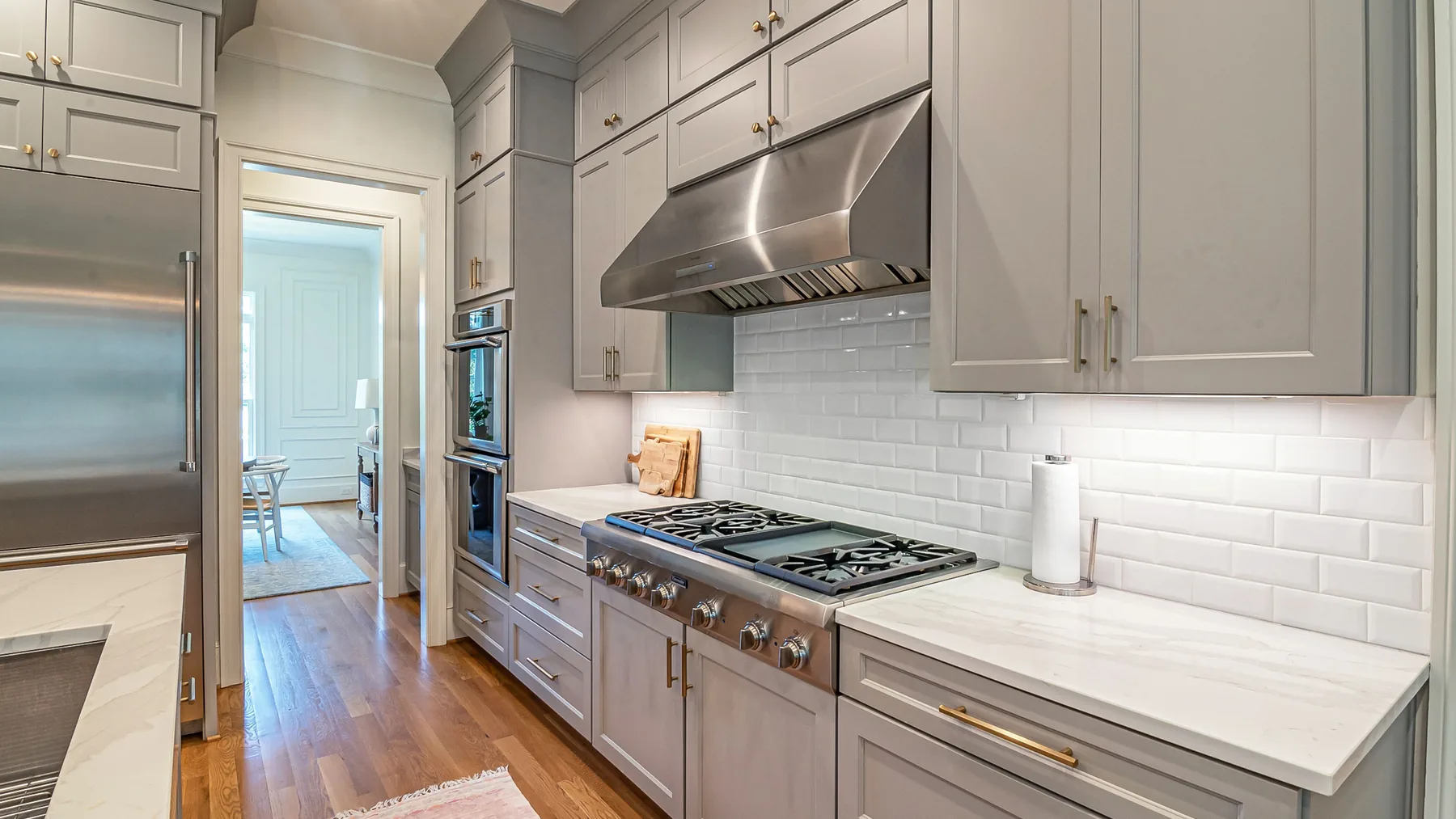
Maple is the wood we recommend most often for Greenville kitchens, and for good reason. It is hard, durable, and tight-grained, which means it resists dents and moves relatively little with humidity. Its smooth, nearly poreless surface takes paint exceptionally well, giving you the clean, furniture-grade white and colored finishes that dominate Upstate kitchens right now. Maple also stains nicely, though its subtle grain reads more contemporary than dramatic. If you want a durable, versatile cabinet that behaves in our climate and suits almost any style, maple is hard to beat.
Oak has swung back into style, and modern oak kitchens look nothing like the golden oak of decades past. Red and white oak are strong, widely available, and, especially in quarter-sawn cuts, very stable against humidity, which makes them a smart pick for our climate. Oak has a bold, open grain that shows beautifully under a stain and gives a kitchen texture and warmth. For Greenville homeowners who want visible grain and a timeless, sturdy cabinet, oak delivers character and stability in one package, often at a friendly price.
Cherry is the choice for homeowners who want richness and elegance. It has a smooth, fine grain and a warm reddish tone that darkens and grows deeper over the years as it is exposed to light, so a cherry kitchen literally matures into its color. It works especially well in traditional and transitional Greenville homes. Cherry is a premium wood, so it costs more than maple or oak, but for a formal kitchen or a statement island, its natural glow is worth it. Just plan for that darkening so you love the color it becomes, not only the color on day one.
For a rustic or farmhouse look that suits a lot of Upstate properties, hickory brings dramatic grain and strong color variation from board to board, along with exceptional hardness. It is a favorite for lake houses and country kitchens around Travelers Rest and Easley. Beyond the big four, we also build in painted poplar for budget-conscious paint-grade projects and can source specialty species for a particular design. The American Hardwood Information Center is a helpful neutral resource for comparing the properties of each species if you want to dig deeper.
A quick but important point: a quality cabinet is rarely all solid wood. The doors and face frames are solid hardwood, while the boxes are best built from furniture-grade plywood, which is actually more stable against humidity than solid panels and holds hardware better than particleboard. In our climate, that plywood-box, solid-wood-door construction is the sweet spot for longevity. When you compare quotes in Greenville, look past the door wood and ask what the boxes are made of, because that is where cheap cabinets cut corners.
The last step is fitting the wood to the look you want and the number you have in mind. Painted kitchens call for smooth, tight-grained maple or poplar. Stained, grain-forward kitchens shine in oak, cherry, or hickory. Budget generally runs from poplar and oak on the friendlier end up through maple and into cherry at the top. During your design visit we bring real door samples into your home so you can see the grain and finish under your own lighting, because a sample that looks perfect in a showroom can read completely differently in a Greenville kitchen at dusk.
Whatever species you choose, a little care keeps it looking new through our humidity swings. Run the range hood and bath fans so cooking steam and shower moisture do not sit on the finish, and try to keep indoor humidity in a moderate range with your HVAC rather than letting the house get swampy in July or bone-dry when the heat runs all winter. Wipe spills promptly, especially near the sink and dishwasher where standing water is the enemy of any wood, and clean with a soft cloth instead of harsh sprays that can dull the finish over time. Cherry owners can rotate small counter items occasionally so the wood darkens evenly with the light. None of this is demanding, and it is the difference between cabinets that age gracefully in a Greenville kitchen and ones that look tired before their time.
There is no single best wood, only the best wood for your kitchen, your style, and our climate. Maple wins for painted durability, oak for grain and value, cherry for warmth and elegance, and hickory for rustic character, and all of them perform when they are properly built with sealed finishes and stable box construction. Tell us the look you are after and we will match it to a wood that will still be tight and beautiful long after the humidity has come and gone many times over.
All solid wood moves with Upstate humidity, but stable, tight-grained species like maple and quarter-sawn oak move the least and are the safest bets for our climate. Just as important as the species is proper acclimation and a quality finish that seals the wood, plus doweled or mortise joints that flex without cracking. A well-built maple or oak door in a Greenville kitchen will stay tight for decades.
It depends on the look you want. Maple and other tight-grained woods take paint beautifully with a smooth, furniture-like finish, which is why most white and colored kitchens in Greenville are painted maple. If you want visible grain, oak, cherry, and hickory are stain-grade favorites that show off their natural character. We help you match the wood to the finish so you are not fighting the material.
Why Cabinet Finish Matters in South Carolina's Humidity — Custom cabinetry designed, built, and installed across Greenville and the Upstate.